
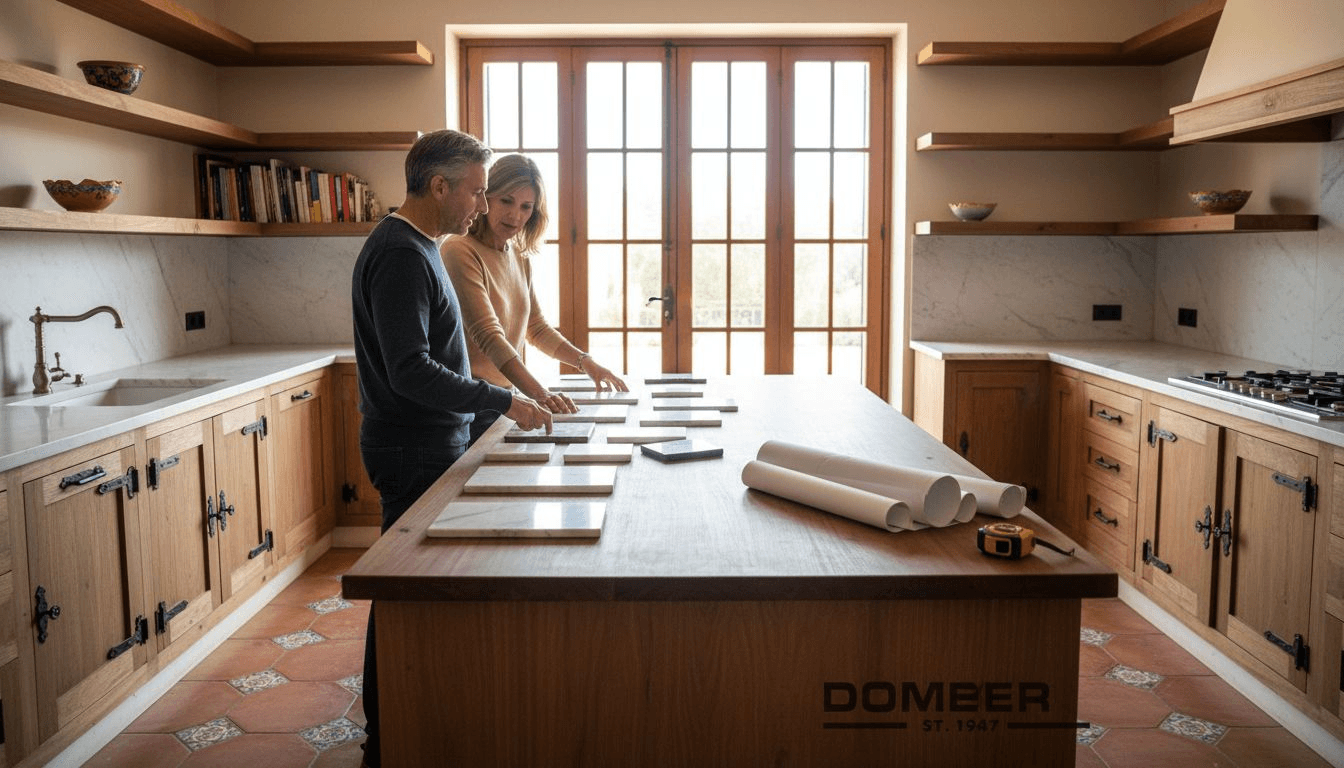
Designing a luxury kitchen in Spain is a special challenge. Off-the-shelf solutions often waste space and fail to meet the unique needs of your household. Without the right approach, even beautiful kitchens quickly feel impractical or dated, leaving you frustrated during daily use.
This guide will show you how bespoke kitchen design brings together true craftsmanship, tailored layouts, and premium materials for both everyday comfort and lasting style. You’ll discover practical, expert-backed strategies to create a space that fits your lifestyle and stands out for its beauty and function.
Get ready to uncover the most reliable ways to transform your kitchen from simply stylish to genuinely luxurious. Each key point reveals a tried-and-tested technique that turns wasted opportunities into features you’ll enjoy every day.
Table of Contents
- 1. Embrace Bespoke Layouts for Maximum Functionality
- 2. Select Premium Materials and Artisanal Finishes
- 3. Incorporate Clever Storage with Custom Joinery
- 4. Add Elegant Lighting to Highlight Craftsmanship
- 5. Personalise the Space with Tailored Details
- 6. Blend Traditional Techniques with Modern Technology
Quick Summary
| Key Message | Explanation |
|---|---|
| 1. Design a bespoke kitchen layout | Tailor your kitchen design to your specific cooking and living habits for maximum efficiency. |
| 2. Choose premium materials and finishes | Opt for high-quality materials that enhance durability and aesthetic appeal, ensuring long-lasting beauty. |
| 3. Implement smart storage solutions | Custom joinery transforms unused spaces into functional storage, maximising every inch of your kitchen. |
| 4. Prioritise effective lighting | Layered lighting highlights craftsmanship and enhances the kitchen's overall atmosphere, adjusting for different activities. |
| 5. Personalise your space with unique details | Integrate personal touches and bespoke elements to reflect your individuality and lifestyle within the kitchen. |
1. Embrace Bespoke Layouts for Maximum Functionality
One kitchen layout works perfectly for one family and fails entirely for another. Your kitchen's success depends on designing a layout tailored specifically to how you live, cook, and move through the space.
The foundation of any functional kitchen rests on understanding workflow efficiency. Professional kitchen design centres around the classic work triangle, which connects your cooker, sink, and refrigerator. These three zones form the heart of your cooking routine, and their placement determines whether you glide through meal preparation or shuffle between distant appliances.
But custom layouts go far beyond this principle. A bespoke design considers your specific needs, not generic standards. Do you have multiple cooks in your household? Perhaps you need two distinct work zones. Are you entertaining frequently? Consider positioning your kitchen to flow seamlessly with dining and living areas.
Research on spatial organisation and movement efficiency shows that ergonomic design directly impacts daily comfort and reduces unnecessary movement during cooking. This matters because you'll spend hundreds of hours in your kitchen each year.
Your kitchen's layout should match your lifestyle, not force you to adapt to a generic design.
Consider these essential elements when planning your bespoke layout:
- Storage placement near the areas where you'll use items most frequently
- Appliance grouping that creates logical workflow sequences
- Worktop height and depth customised for your physical comfort
- Lighting zones positioned precisely where you prepare and cook food
- Traffic patterns that keep family movement separate from cooking zones
Custom cabinetry plays a crucial role here. Rather than accepting standard cupboard sizes, bespoke cabinetry adapts to your kitchen's unique dimensions and your personal requirements. A designer specialising in artisanal craftsmanship can create storage solutions that fit your actual needs, from deep drawers for cookware to shallow shelving for frequently used spices.
The balance between aesthetics and function matters too. Your layout should be beautiful to look at whilst remaining genuinely practical. This is where working with experienced craftspeople—those who understand both design principles and practical construction—makes a real difference.
Your kitchen's layout determines whether cooking feels like work or pleasure. Take time to think about how you actually use your space before committing to any design decisions.
Pro tip: Document your current kitchen habits for one week, noting when you move between appliances, where you reach most often, and which zones create bottlenecks, then use this real-world data to inform your bespoke layout decisions.
2. Select Premium Materials and Artisanal Finishes
The materials you choose determine whether your kitchen looks luxurious for five years or remains genuinely beautiful for fifty. Premium materials and artisanal finishes transform a kitchen from functional space into a statement of refinement and permanence.
Luxury kitchens stand apart because they prioritise quality over expedience. Rather than selecting from mass-produced options, you're choosing materials selected for their durability, visual richness, and timeless appeal. This distinction shapes everything from how surfaces age to how the light plays across your worktops and cabinetry.
Natural stone offers unmatched sophistication and longevity. Marble, granite, and bespoke stone selections bring unique veining and depth that no artificial surface can replicate. Each slab tells its own geological story, making your kitchen genuinely one of a kind.
Exotic hardwoods elevate your cabinetry beyond simple storage. Woods like walnut, oak, and rare European timber provide warmth, character, and structural integrity that mass-produced alternatives simply cannot match. The grain patterns alone create visual interest that improves with age.
Finishes deserve equal attention to materials themselves. Premium finishes like matte lacquers and brushed metals elevate surface textures whilst contributing sophisticated depth to your space. These finishes resist fingerprints better than glossy alternatives and develop a patina that enhances their beauty over time.
The best luxury kitchens combine materials that age beautifully with finishes that improve with use.
When selecting your materials, consider these essential elements:
- Natural stone surfaces for worktops, splashbacks, and flooring that withstand decades of daily use
- Bespoke tile work that reflects your personal aesthetic rather than following trends
- Metal accents in brushed brass, copper, or stainless steel that add contemporary elegance
- Handcrafted cabinetry in premium hardwoods with artisanal finishing techniques
- Hardware and fixtures in quality metals that feel substantial and well-engineered
Artisanal finishes differ fundamentally from industrial processes. Craftspeople apply finishes by hand, allowing for variation and individual character. This approach means each cabinet, each door, each surface carries evidence of skilled labour and attention to detail.
Your investment in premium materials pays dividends across decades. Whilst initial costs exceed mass-market alternatives, superior materials resist wear, maintain their appearance, and often become more beautiful as they age. This represents genuine luxury, not mere expense.
Pro tip: Request samples of finishes under different lighting conditions, including natural daylight and evening illumination, before committing to materials, as finishes shift in appearance throughout the day and seasons.
3. Incorporate Clever Storage with Custom Joinery
Standard kitchen cupboards waste space. Custom joinery transforms those wasted corners and awkward gaps into intelligent storage that actually functions the way you live. This is where bespoke design proves its worth, turning storage from an afterthought into a central feature of your kitchen's success.
Custom joinery allows you to maximise every cubic centimetre of your kitchen. Rather than accepting standardised cabinet dimensions, tailored cabinetry fits your exact space with precision. This approach eliminates dead zones where things disappear and forgotten items accumulate.
The magic happens through thoughtful design details. Pull-out pantry units increase visibility and accessibility compared to deep cupboards where items hide at the back. Slide-out waste bins integrate seamlessly into your cabinetry, keeping rubbish out of sight whilst remaining conveniently accessible. Integrated lighting within custom joinery reveals contents instantly and adds ambiance to your kitchen.
Custom joinery solutions work particularly well for challenging spaces. Sloped ceilings, irregular walls, or unusually shaped areas that standard kitchens cannot accommodate become opportunities for creative storage. A skilled joiner designs cabinetry that complements your space's unique characteristics rather than fighting against them.
The aesthetic integration matters as much as the functionality. Custom joinery maximises storage through tailored cabinetry designed to fit specific dimensions whilst maintaining design coherence. Unlike modular systems, bespoke joinery feels intentional and harmonious.
Superior storage solves the challenge of organisation before you even move in.
Consider these intelligent storage solutions for your custom kitchen:
- Corner cabinets with rotating mechanisms that access otherwise dead corner space
- Deep drawers instead of traditional cupboards for easier access and organisation
- Vertical dividers within drawers to separate cookware and utensils logically
- Hidden compartments behind panels for less-used items or specialist equipment
- Integrated spice racks and vertical storage for oils, condiments, and frequently used items
- Adjustable shelving that adapts as your storage needs evolve
Fine hardwoods and high-gloss finishes ensure your storage solutions look as beautiful as they function. The craftsmanship that goes into custom joinery means drawers glide smoothly after years of use, hinges remain perfectly balanced, and joints stay tight.
Your kitchen's storage capacity should match your lifestyle, not force you to compromise on what you keep or how you organise it. Clever custom joinery makes this possible.
Pro tip: Audit your current kitchen storage for six weeks, noting what you use daily, weekly, and occasionally, then share this data with your joiner so they design cabinetry around your actual usage patterns.
4. Add Elegant Lighting to Highlight Craftsmanship
Lighting transforms how people perceive your kitchen's craftsmanship. A beautifully designed kitchen with exceptional joinery and premium materials deserves lighting that reveals rather than conceals those details. Strategic illumination makes the difference between a kitchen that looks good and one that absolutely captivates.
Craftsmanship demands visibility. The hand-carved details in your cabinetry, the grain patterns in exotic hardwoods, and the texture of premium finishes all require light to shine. Without proper lighting, these invested details fade into shadows and go unappreciated.
Layered lighting creates depth and functionality. Rather than relying on a single ceiling fixture, luxury kitchens use multiple lighting types working together. This approach gives you flexibility to adjust brightness and mood depending on whether you're preparing breakfast or hosting dinner.
Task lighting illuminates your work areas precisely. Under-cabinet lighting reveals your worktops and splashbacks, making food preparation safer and more enjoyable. Pendant lights positioned above islands provide focused light where you need it most.
Ambient lighting sets the overall mood. Recessed ceiling lights or decorative fixtures create general illumination throughout the space. This layer ensures your kitchen feels welcoming and functional at any time of day.
Accent lighting showcases your finest design features. Wall-mounted lights beside open shelving highlight displayed ceramics or glassware. Uplighting beneath cabinetry reveals the craftsmanship of suspended units. Internal cabinetry lighting draws attention to curated collections or beautiful tableware.
Lighting should be invisible during the day and elegant in the evening, revealing beauty you've already invested in.
Consider these elegant lighting approaches for your custom kitchen:
- LED strip lighting beneath cabinetry, hidden from view but illuminating your worktop
- Pendant lights in handcrafted materials that complement your overall design aesthetic
- Track lighting that adjusts to highlight different kitchen areas throughout the day
- Glass or translucent cabinetry with internal lighting to showcase special items
- Dimmer switches allowing you to adjust brightness and create different atmospheres
- Warm colour temperature (2700K to 3000K) that complements natural materials and finishes
The colour temperature of your lighting matters tremendously. Warm light enhances natural wood tones and creates an inviting atmosphere. Cool light suits modern minimalist designs. Most luxury kitchens favour warm lighting because it feels more sophisticated and welcoming.
Quality light fixtures themselves become design elements. Handcrafted pendant lights or vintage-inspired brass fixtures add character whilst serving practical purposes. These elements contribute to your kitchen's overall story.
Pro tip: Install lighting on separate circuits with individual dimmer controls so you can adjust brightness in different zones independently, adapting your kitchen's appearance from bright morning workspace to intimate evening gathering place.
5. Personalise the Space with Tailored Details
Your kitchen should reflect who you are, not who a designer thinks you should be. Tailored details transform a beautiful kitchen into one that genuinely feels like yours. These personal touches make the difference between a luxury space and a luxury home.
Personalisation happens through small, intentional choices that accumulate into genuine character. Perhaps you display heirloom ceramics in open shelving, or you integrate a wine cooler that matches your entertaining habits. Maybe you request custom handles crafted from a material meaningful to your family.
Bespoke hardware offers unlimited personalisation possibilities. Rather than selecting from a catalogue, you can commission handles and knobs that reflect your aesthetic. Hand-forged brass, reclaimed wood, or contemporary stainless steel designs all become extensions of your kitchen's personality.
Open shelving allows you to showcase items you love. Display beautiful glassware, cookbooks, or artisanal serving pieces that tell your story. This approach requires intentional curation but creates visual warmth that closed cabinetry cannot achieve.
Colour choices express your personal style. Whilst neutral palettes feel timeless, introducing colours that resonate with you makes the space unmistakably yours. A sage green cabinetry or deep blue accent wall can transform your kitchen from generic to genuinely personal.
True luxury means having a kitchen designed around your life, not adapting your life to fit a design.
Consider these personalisation approaches for your custom kitchen:
- Custom paint colours or wood stains that match your home's colour palette
- Handcrafted tiles featuring patterns or materials meaningful to you
- Bespoke cabinetry handles commissioned from artisans or craftspeople
- Display areas for collections, artwork, or items that bring you joy
- Integrated seating designed around how your family actually gathers
- Specialty appliances matching your cooking interests and entertainment style
- Textured backsplashes in materials that complement your aesthetic preferences
Personalisation also means functional details tailored to your household. A family with young children needs different storage solutions than empty nesters. Food enthusiasts require different appliance arrangements than those who prefer simple meals.
Work closely with your designer to communicate what matters to you. Share inspiration images, discuss your daily routines, and explain your vision for how the space will feel. The most successful luxury kitchens reflect genuine personality.
Pro tip: Create a mood board combining colours, textures, materials, and images that resonate with you, then share it with your designer so they understand your aesthetic preferences before finalising any decisions.
6. Blend Traditional Techniques with Modern Technology
The finest luxury kitchens honour the past whilst embracing the future. Combining time-tested craftsmanship with contemporary innovation creates spaces that are both beautiful and genuinely functional. This balance distinguishes truly exceptional kitchens from those that simply look impressive.
Traditional joinery and hand-finishing techniques possess qualities that machines cannot replicate. The precision of hand-cut dovetails, the warmth of hand-applied finishes, and the character of artisanal craftsmanship create depth and authenticity. These methods have proven themselves across centuries.
Modern technology solves genuine problems without replacing what works beautifully. Smart storage systems, precision appliances, and efficient ventilation make daily cooking easier. Temperature-controlled wine storage, induction cooktops, and integrated water systems represent meaningful advances.
The fusion matters most. You preserve traditional woodworking whilst incorporating modern drainage systems. You maintain bespoke cabinetry craftsmanship whilst adding contemporary lighting technology. Maintaining traditional cooking techniques in modern kitchens demonstrates how heritage methods and modern efficiency enhance each other rather than compete.
The best luxury kitchens feel timeless because they respect tradition whilst refusing to ignore practical innovation.
Consider these ways to blend both approaches:
- Hand-crafted cabinetry with modern soft-close hinges and drawer mechanisms
- Traditional wood finishes combined with advanced waterproof sealants
- Artisanal tilework integrated with contemporary underfloor heating
- Heritage cooking methods supported by precision modern appliances
- Bespoke joinery featuring hidden integrated technology and charging points
- Traditional materials like natural stone paired with modern kitchen systems
- Hand-finished details enhanced by contemporary LED lighting solutions
The Spanish artisanal tradition understands this balance intimately. European craftspeople have refined techniques over generations, yet they readily adopt technology that improves durability and functionality. A hand-carved wooden door gains nothing by rejecting modern hinges.
When selecting appliances, choose quality equipment that performs genuinely well rather than chasing every new feature. A reliable induction cooktop works beautifully with traditional cooking methods. Professional-grade ventilation supports authentic culinary practice. Smart storage solutions reduce wasted time searching for ingredients.
Your kitchen's longevity depends on this balance. Pure traditionalism might create beauty but sacrifice functionality. Pure modernism might maximise efficiency but lack character. The synthesis creates kitchens you'll treasure for decades.
Pro tip: Prioritise technology that solves genuine problems in your daily cooking routine rather than features you might use occasionally, ensuring your investment in modern systems genuinely enhances how you actually cook.
Below is a comprehensive table summarising the central concepts and insights discussed throughout the article focusing on bespoke kitchen design principles.
| Key Aspect | Description | Benefits |
|---|---|---|
| Bespoke Layouts | Customised kitchen layouts tailored to individual workflow and lifestyle, enhancing functionality. | Improved efficiency and a pleasant cooking experience through optimised workflows. |
| Premium Materials | Utilisation of durable natural stones, exotic hardwoods, and artisanal finishes that improve beauty and longevity. | Longevity and aesthetic appeal, with surfaces that age gracefully and require less upkeep. |
| Intelligent Storage Solutions | Implementation of custom joinery with advanced space-saving technologies, optimising accessibility and organisation. | Maximised storage capacity and enhanced kitchen organisation and convenience. |
| Strategic Lighting Design | Layered lighting solutions including task, ambient, and accent options tailored to highlight specific areas and craftsmanship. | Enhanced aesthetic presentation of materials and finishes, as well as adaptable atmospheres. |
| Personalised Details | Integration of unique design elements, including handcrafted hardware and bespoke colour schemes, reflecting individual taste and lifestyle. | Creation of a distinctive and personally meaningful kitchen space. |
| Harmonisation of Tradition and Technology | A balanced approach combining artisanal construction techniques and modern conveniences such as smart appliances. | Functional innovation paired with aesthetic charm and timelessness. |
Elevate Your Kitchen with Bespoke Craftsmanship and Timeless Design
Designing a luxury kitchen that truly reflects your lifestyle requires more than just choosing a layout or materials. The challenge lies in blending customised storage, premium artisanal finishes, and tailored details with practical functionality that lasts a lifetime. At Domberg, we understand these challenges deeply. We specialise in handcrafted woodwork and bespoke interior solutions that honour traditional joinery while embracing modern technology — exactly what luxury kitchens demand to become both elegant and efficient.
Experience the difference of a kitchen designed around you with personalised cabinetry, premium natural materials, and intelligent storage solutions that eliminate wasted space. From handcrafted doors and intricate wood panels to seamless integration of modern appliances, our work transforms spaces into refined, living masterpieces. Bring the inspired ideas from "6 Inspiring Custom Kitchen Design Ideas for Luxury Homes" to life with Domberg.es.
Ready to create a kitchen where every detail tells your story and craftsmanship meets innovation? Explore our portfolio of bespoke custom interiors and start your journey toward a kitchen that combines beauty, function and heritage today. Discover how Domberg can craft an exceptional space tailored just for you at Domberg.es.
Frequently Asked Questions
What are the key elements for a bespoke kitchen layout?
A bespoke kitchen layout should prioritise workflow efficiency, considering the classic work triangle of the cooker, sink, and refrigerator. Assess your daily habits and document appliance accessibility to enhance comfort and functionality.
How can I select premium materials for my luxury kitchen?
Select materials that offer durability and timeless elegance, such as natural stone and exotic hardwoods. Request samples under different lighting conditions to ensure they match your vision before finalising your choices.
What type of storage solutions should I consider for a custom kitchen?
Consider custom joinery that maximises space and functionality, including pull-out pantry units and deep drawers. Evaluate your current storage needs and gather data on your usage patterns to inform your design decisions.
How can I incorporate effective lighting in my luxury kitchen?
Layer your lighting for functionality and ambiance, using task, ambient, and accent lighting types. Plan to install separate circuits with dimmer controls for different zones, allowing you to create the perfect atmosphere for any occasion.
What personalised details can I add to my custom kitchen design?
Integrate bespoke hardware and open shelving to showcase items that reflect your personality. Choose custom colours and textures that resonate with your style and enhance the kitchen's character.
How do I blend traditional techniques with modern technology in my kitchen?
Aim for a balance by using handcrafted cabinetry alongside modern appliances. Focus on selecting technology that genuinely enhances your cooking experience, ensuring it complements traditional craftsmanship without compromising aesthetics.