

Selecting bespoke woodwork for a luxury interior can present complex choices for even the most experienced designers and architects in Spain. Every detail—from the overall aesthetic direction to functional requirements—sets the tone for a project that balances beauty and practicality. By focusing on the overall vision and functionality at the outset, you create a foundation that guides every subsequent decision, ensuring the finished space achieves both precision and sophistication expected in high-end residential and commercial environments.
Table of Contents
- Step 1: Assess Project Style And Functional Needs
- Step 2: Select Premium Wood Species And Finishes
- Step 3: Specify Bespoke Joinery And Craftsmanship Details
- Step 4: Verify Quality And Final Installation
Quick Summary
| Important Insight | Explanation |
|---|---|
| 1. Define project style and function | Establishing a clear style and functional direction prevents misalignment and costly revisions later on in the project. |
| 2. Choose premium wood species carefully | Selecting the right wood species enhances both aesthetic appeal and durability in luxury woodwork projects. |
| 3. Specify detailed joinery techniques | Clear specifications for joinery methods ensure that the craftsmanship aligns with your design vision and functional needs. |
| 4. Conduct thorough quality verification | Inspecting woodwork before installation safeguards against expensive corrections and confirms quality with original specifications. |
| 5. Schedule multiple inspections for quality assurance | A three-stage inspection process identifies issues early and documents project completion, ensuring long-lasting performance. |
Step 1: Assess project style and functional needs
Before selecting any woodwork, you must establish a clear vision for your project. This foundation determines every decision you'll make moving forward, from material choices to joinery details. Getting this right at the outset prevents costly revisions later.
Start by identifying the overall aesthetic direction your space demands. Are you designing a contemporary penthouse in Barcelona with clean lines and minimalist detailing? A traditional villa requiring classical mouldings and period-appropriate craftsmanship? Or perhaps a hybrid approach that blends rustic warmth with modern functionality?
Understanding the overall vision and functionality of a space is essential for effective project planning. Your style choice directly influences the types of wood, finishes, and joinery techniques that will work best. A modern commercial office requires entirely different woodwork solutions than a heritage residential conversion.
Now consider the functional requirements honestly. What will the woodwork actually do in this space? Custom cabinetry needs to store specific items and support daily use. Wall panelling must enhance acoustics in a music room or provide insulation in a contemporary loft. Creating functional and beautiful spaces requires balancing how elements will serve your clients' lifestyle, not just look impressive.
Document these key functional needs:
- Daily user patterns and traffic flow through the space
- Storage or display requirements and their capacity
- Climate control considerations (humidity, temperature sensitivity)
- Maintenance expectations from your client
- Durability demands based on use intensity
Clarity on style and function prevents misalignment between your vision and the craftsperson's execution. Your design intent becomes the roadmap for selecting appropriate wood species, finishes, and construction methods. Without this foundation, even exceptional craftsmanship cannot deliver the results your luxury project demands.
Establish your aesthetic direction and functional requirements before discussing materials or budgets—this clarity saves time and ensures every woodwork element serves a purposeful role.
Pro tip: Create a concise project brief documenting the style direction, primary functions, and any lifestyle factors that influence woodwork selection—this document becomes invaluable when communicating with your craftsperson about your expectations.
Step 2: Select premium wood species and finishes
Your wood selection determines both the aesthetic character and longevity of the entire project. The right species combined with an appropriate finish creates woodwork that performs beautifully for decades. This decision requires balancing visual appeal with practical durability demands.
Begin by evaluating which hardwood species suit your design vision and functional requirements. Oak offers bold grain patterns and timeless elegance, whilst walnut delivers sophisticated depth with rich chocolate tones perfect for contemporary luxury interiors. Cherry provides warmth and develops character over time, and maple delivers clean, fine grain for minimalist spaces. Each species has distinct working properties that affect joinery precision and the final appearance.
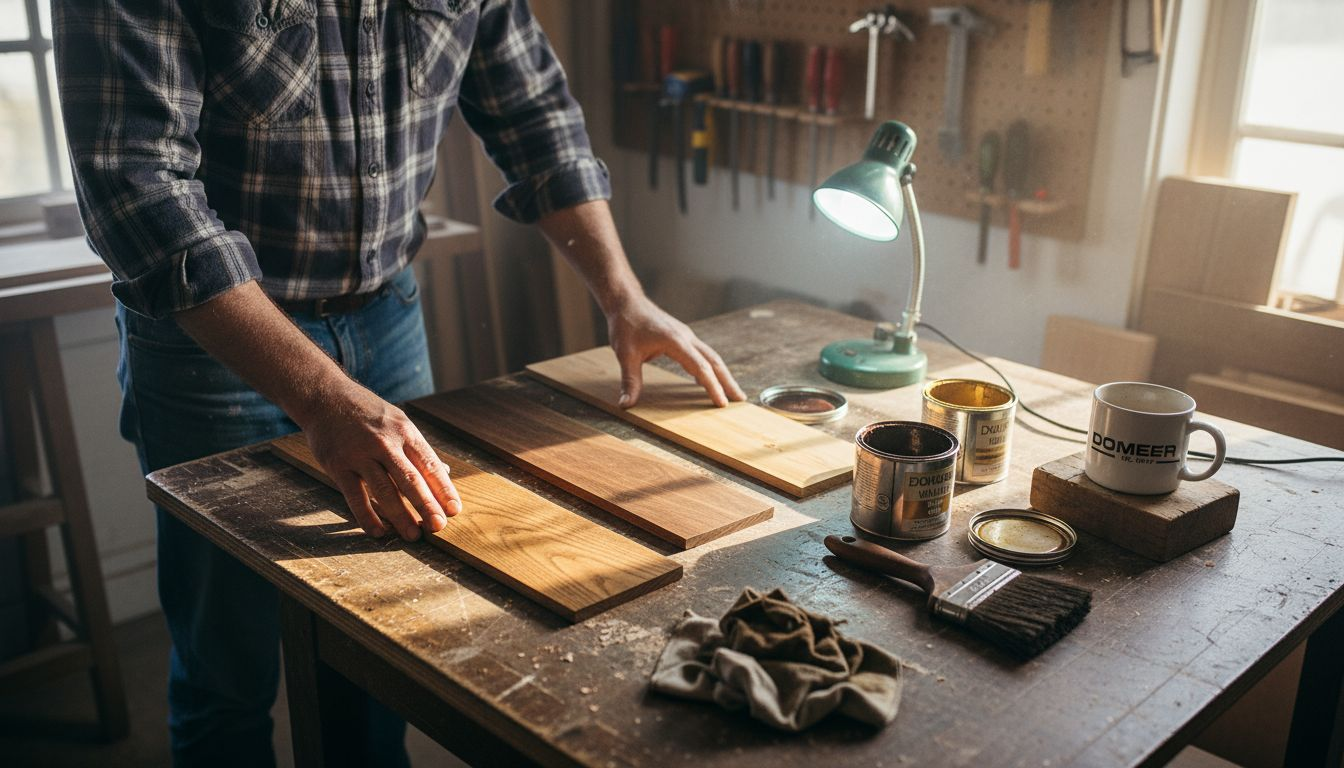
Understanding wood species characteristics helps you select timber that matches both your aesthetic goals and the space's exposure conditions. Hardwoods are universally preferred in luxury applications because they resist daily wear, accept detailed joinery work, and age beautifully. Softwoods rarely appear in high-end residential or commercial work unless specified for particular architectural purposes.
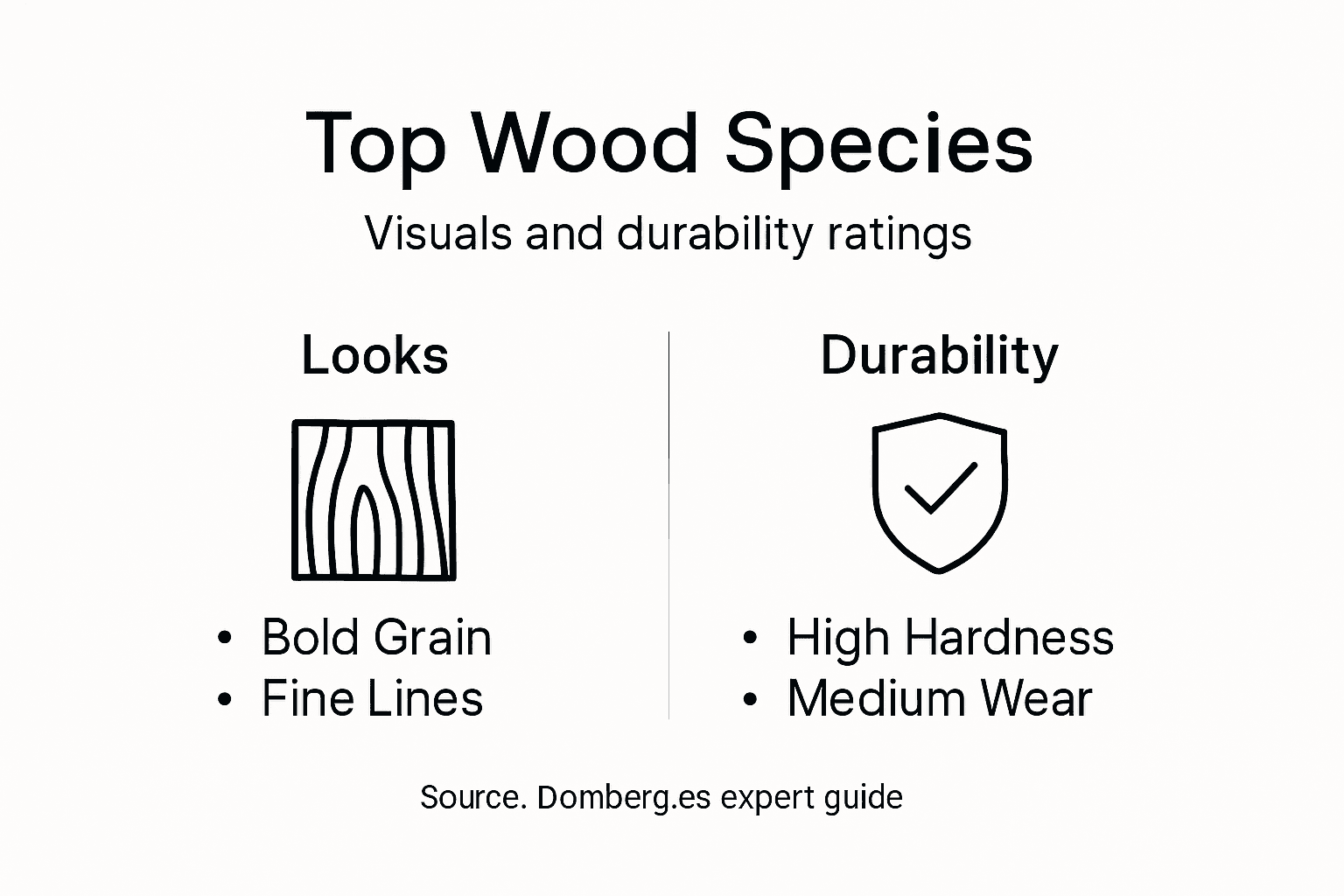
Here's a quick comparison of hardwood species commonly used in luxury woodwork projects:
| Wood Species | Visual Appeal | Durability Level | Ideal Applications |
|---|---|---|---|
| Oak | Prominent grain, classic look | High, resists wear | Cabinets, panelled walls |
| Walnut | Rich colour, sophisticated | Very high, ages well | Contemporary furniture |
| Cherry | Warm tones, gains character | Moderate, smooth finish | Decorative features |
| Maple | Subtle grain, light colour | High, clean lines | Minimalist interiors |
This table helps clarify how each hardwood fits style and usage requirements.
Now address the critical finishing stage. Your finish protects the wood against moisture, UV damage, and wear whilst enhancing the natural colour and grain. Modern factory-applied finishes under controlled conditions deliver superior consistency compared to site-applied alternatives. Consider whether you want natural translucent finishes that showcase wood character, subtle tinted coatings that shift tone, or opaque finishes that emphasise form over grain.
Key finishing considerations include:
- Exposure conditions (humidity, temperature fluctuation, direct sunlight)
- Usage intensity (light residential versus high-traffic commercial)
- Maintenance expectations from your client
- Environmental standards (waterborne, low-VOC finishes)
- Aesthetic goals (matte, satin, or gloss sheen)
Waterborne architectural finishes applied in factory settings maximise durability whilst meeting environmental standards. This approach ensures consistent colour development, superior protection, and compliance with European building regulations.
Premium wood species combined with factory-applied finishes create woodwork that resists wear, ages gracefully, and maintains visual appeal across decades of use.
Pro tip: Request finish samples on actual timber offcuts from your preferred species, viewing them under the specific lighting conditions of the installed space before final approval—factory lighting differs significantly from natural daylight or artificial interior lighting.
Step 3: Specify bespoke joinery and craftsmanship details
This is where your design vision becomes a craftsperson's specification. Detailed joinery instructions transform a standard project into bespoke woodwork that reflects your client's expectations and architectural intent. Clear technical specifications prevent misinterpretation and ensure the finished work matches your vision precisely.
Begin by identifying which joinery techniques suit your design aesthetic and functional demands. Mortise and tenon joints create structural strength in frames and furniture, whilst dovetail joints deliver both visual sophistication and exceptional durability in cabinetry. Biscuit joints offer efficient assembly with strong glue lines, ideal for panel construction. Traditional joinery methods provide structural integrity whilst adding genuine craftsmanship value that distinguishes luxury work from mass production.
Consider how visible joints contribute to or detract from your design. Hidden joinery creates seamless contemporary aesthetics, whilst exposed dovetails add handcrafted character prized in traditional and artisanal spaces. The joint choice communicates design intention and influences both the visual impact and construction timeline.
Now specify the level of craftsmanship detail your project demands. Are you incorporating hand-carved decorative elements? Requiring mitre joints with grain-matched veneers? Specifying hand-planed surfaces with subtle surface texture? Each decision affects both timeline and budget significantly.
Critical joinery specifications include:
- Joint types and their location within the assembly
- Grain matching requirements across panels and frames
- Surface finishing (hand-planed, sanded, polished)
- Hardware integration (concealed hinges, soft-close mechanisms)
- Tolerance standards for precision fitting
Following architectural woodwork standards ensures your joinery specifications deliver both aesthetic excellence and structural reliability. These standards provide a shared quality framework that craftspeople understand and respect, translating your vision into consistent results.
Document every detail in a technical specification sheet for your craftsperson. Include scaled drawings, joint diagrams, material callouts, and finish samples. Ambiguity at this stage creates costly revisions later.
Precise joinery specifications unite design vision with craftsmanship capability, ensuring luxury woodwork that performs flawlessly for decades.
Pro tip: Request a full-scale timber mock-up of complex joinery details before production commences—this £500 investment prevents £5,000 mistakes by confirming joint aesthetics, grain matching, and assembly tolerances match your expectations precisely.
Step 4: Verify quality and final installation
This final stage protects your investment and ensures the woodwork performs as designed. Rigorous quality verification before installation prevents costly on-site corrections and guarantees that every detail meets your specifications. A systematic inspection process confirms that months of planning and craftsmanship deliver the promised result.
Begin your verification before installation by inspecting the completed woodwork at the craftsperson's workshop. Examine joinery for precision fit, grain matching for consistency, and finishes for uniformity and absence of defects. Check that dimensions match your specifications precisely and that hardware operates smoothly. This stage occurs when corrections remain simple and cost-effective.
Evaluate the finished product against your original specifications and samples. Does the wood colour match your approved samples under the workshop lighting? Check surface flatness, gap alignment between components, and finish quality without scratches or imperfections. Request a walkthrough with the craftsperson to understand any design decisions and confirm everything meets your vision.
Following finish carpentry installation standards ensures that on-site installation adheres to strict criteria for alignment, fit, and aesthetic performance. Installation teams must follow precise tolerances to maintain the quality achieved in the workshop.
The following table summarises key installation quality checks essential for flawless results:
| Verification Point | Why It's Essential | Potential Impact |
|---|---|---|
| Component alignment | Ensures seamless aesthetics | Prevents visual defects |
| Gap consistency | Indicates joinery accuracy | Affects durability |
| Finish protection | Preserves wood surface | Avoids costly repairs |
| Hardware function | Confirms operational reliability | Boosts user experience |
Use this as a reference to maintain high standards during installation.
Key installation verification points include:
- Plumb, level, and square alignment of all components
- Gap consistency between joinery elements and adjacent surfaces
- Finish protection during handling and installation
- Hardware function and aesthetic integration
- Final surface condition without installation damage
Consider requesting AWI Quality Certification verification for significant projects. This independent inspection confirms that fabrication and installation meet established excellence standards, providing documentation of quality for your client and future property records.
Document the completed installation with photographs before furniture placement. This record protects against future disputes about condition and provides evidence of successful project delivery.
Thorough pre-installation verification and adherence to finish carpentry standards ensure your luxury woodwork performs flawlessly throughout its lifespan.
Pro tip: Schedule a three-stage inspection process—workshop pre-installation, site post-installation, and a final walkthrough one month after completion—to catch issues whilst remedies remain straightforward and document the handover formally.
Elevate Your Luxury Interiors with Bespoke Woodwork Expertise
Selecting expert interior woodwork that perfectly balances style, function and craftsmanship is a critical challenge for discerning clients. This guide highlights the complexities of choosing premium hardwoods, specifying precise joinery and ensuring flawless installation to create timeless, enduring interiors. If you aim to avoid costly revisions and transform your design vision into lasting reality, partnering with a seasoned artisan is essential.
Discover how Domberg.es, with its rich heritage since 1947 and expert fusion of traditional joinery and modern techniques, delivers personalised woodwork solutions tailored to your project's unique aesthetic and functional demands. Our mastery in premium finishes and meticulous craftsmanship guarantees wood interiors that age gracefully and perform flawlessly.
Looking to embody your luxury design intent while assuring top-tier quality and durability? Explore our exceptional portfolio of handcrafted windows, doors and cabinetry that meet the highest standards of architectural woodwork. Visit Domberg.es now to begin your bespoke transformation and secure the refined interior your project deserves.
Frequently Asked Questions
How do I determine the right woodwork style for my luxury space?
To find the right woodwork style, assess your overall aesthetic direction and functional needs. Create a project brief that documents your style preferences, desired functionalities, and how the woodwork should complement your space.
What factors should I consider when selecting wood species for interior woodwork?
When selecting wood species, evaluate the aesthetic appeal, durability, and suitability for the specific applications within your space. Focus on hardwoods that offer both visual impact and resilience to daily wear, and document your choices based on functional requirements.
How can I specify detailed joinery techniques for bespoke woodwork?
Begin by identifying the joinery techniques that align with both your design vision and functional demands. Clearly outline your joinery specifications, including joint types and their precise locations, in a technical specification sheet to communicate effectively with your craftsperson.
What steps should I take to ensure quality before installation?
To ensure quality before installation, inspect the completed woodwork at the craftsperson's workshop. Verify that dimensions, finishes, and joinery meet your specifications, as this allows for any necessary adjustments before costly on-site fixes.
How can I maintain durability in my luxury woodwork?
To maintain durability, choose high-quality materials and factory-applied finishes that enhance protection against wear, moisture, and UV damage. Schedule regular maintenance checks to preserve the woodwork's appearance and functionality over time.
Why is it important to request a full-scale timber mock-up?
Requesting a full-scale timber mock-up is crucial as it helps confirm the aesthetic and functional aspects of complex joinery details before production. This small investment can prevent significant costly mistakes during actual installation by verifying your expectations are met.